24 September 2026
We've rounded up 9 of our favourite shed homes from across Australia to showcase the different ways a shed can be designed around the way you want to live.

News
24 February 2016
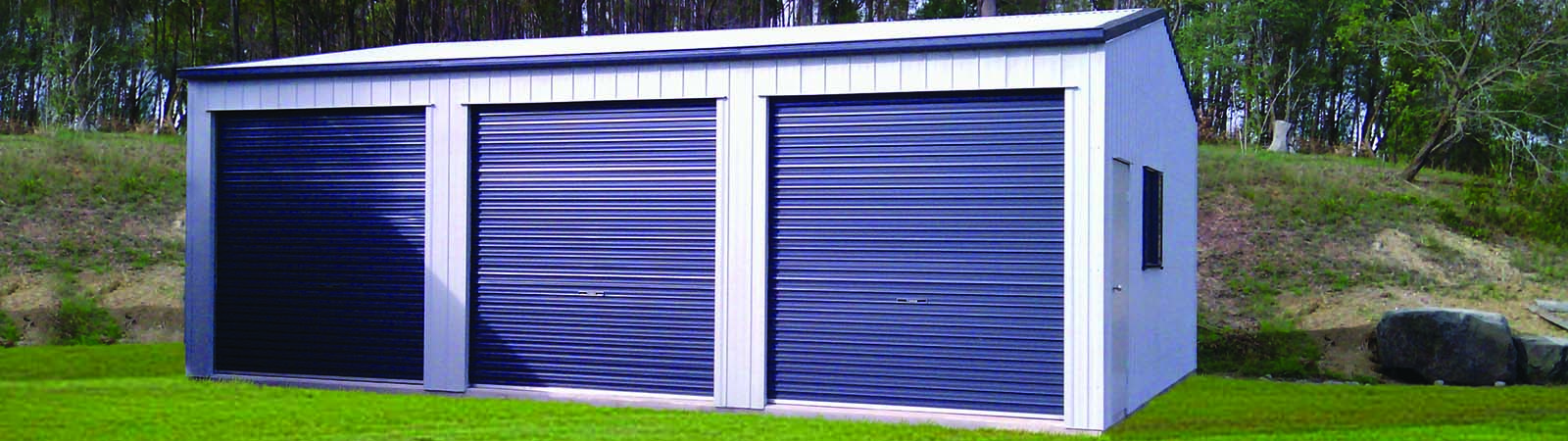
Have you looked around and got a few quotes for a new shed or garage? Not sure which quote represents the best value? Not every quote is equal and many include hidden costs. What’s more, most advertised shed prices are for products that have been designed for standard conditions and not your specific terrain category and wind region. Many of these shed products also include cheap imported steel of varying quality.
When considering a new shed, garage or barn, it’s critical that you receive a quote for a building that’s been engineered for your site and its unique conditions. In order to make an informed decision when comparing shed quotes and prices, make sure you consider the following factors:
Design criteria are a set of parameters that relate to the design and location of your shed. If a shed has not been engineered specifically for your site and region, it may be ill-equipped to handle certain environmental stressors. Not only will the shed have a reduced lifespan; the suitability of its design could be a major consideration in any future insurance claim.
When reviewing your shed quote, make sure that it includes site classification information covering the following design factors:
It is critical that your shed be engineered with reference to these factors. Ideally, you will have to lock in the exact location of your shed through Google Maps or similar, which should then by analysed by an appropriately qualified person to ascertain an accurate design criteria – anything short of this should be questioned!
Australia is divided into different wind regions, with each region classified in terms of wind severity. A number of factors determine a building’s exposure to wind, including its positioning on your property and the features of the surrounding terrain. Buildings situated in high wind areas will generally be of a heavier design compared to those protected by other buildings or tree lines.
The thickness of steel sheeting is defined in terms of its BMT (base metal thickness) value. Where coated COLORBOND® steel is used, TCT (total coated thickness) refers to the thickness of the steel after painting. The make and thickness of the steel sheeting should be displayed clearly on your shed quote, and it is essential that a thickness appropriate to your site’s specific design factors is selected. It is a requirement that roof sheeting be 0.42 BMT or above, while wall sheeting must be 0.35 BMT or above in non-cyclonic regions and 0.42 BMT or above in cyclonic regions.
Not all shed designs are the same, and quality differs between suppliers. This is why it is essential to choose a reputable local supplier that offers site-specific engineering, custom building designs and quality BlueScope Steel products. If your quote comes from a supplier that has been certified by ShedSafe®, then you can be confident that you are being offered a steel building of the highest standard.
ShedSafe® is the industry body charged with facilitating design compliance with the Building Code of Australia for steel sheds. ShedSafe® encourages efficient design of BCA compliant sheds, and represents the industry benchmark for Australian manufactured steel sheds.
We've rounded up 9 of our favourite shed homes from across Australia to showcase the different ways a shed can be designed around the way you want to live.
From price to creative freedom, council approvals, structural integrity and government grants we break down all the reasons why its worth considering a steel kit home.
Ensuring your kit home complies with Australian Standards guarantees your new retreat is completely legal and safe without any guesswork. From site-specific engineering to Class 1a habitable standards, get a brief overview on what to check while researching your kit home options.